About
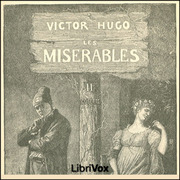
L'Art d'être grand-père de Victor Hugo lu pour Librivox par Bernard. Outre le lecteur, ce livre audio a été produit par : Auditrice attitrée / Dedicated Proof-Listener : Diana Majlinger Méta-coordination/Cataloguage / Meta-Coordinator/Cataloging : Ezwa L'Art d'être grand-père est un recueil de poèmes que Victor Hugo a publié en 1877. Suite à la mort de Charles Hugo, un de ses fils, et de sa femme, Victor Hugo prend en charge ses deux petits enfants Georges et Jeanne Hugo. Il écrit plusieurs poèmes illustrant les comportements et l'innocence reliée à ses petits-enfants qu'il élève seul et avec tendresse. (Résumé par Wikipédia) L'Art d'être grand-père ("The Art of Being a Grandfather") is a series of eighteen poems by Victor Hugo, published in 1877. They were among the last he wrote. On 13 March 1871, his 44-year-old son Charles died of a stroke, while riding in a carriage to a farewell dinner for some of Victor's friends at a restaurant in Bordeaux. Charles's wife died shortly afterwards, and Victor Hugo became the guardian of their children, Georges and Jeanne Hugo. The poems describe the feelings of a grandfather entrusted with innocent young children. Love and tenderness are celebrated, and the complexities, politics, and grand themes of his other poems are set aside. (Summary from Wikipedia) Pour plus d'informations, rendez-vous sur la page catalogue de cet enregistrement. Pour vous renseigner à notre sujet ou pour participer, rendez-vous sur librivox.org . Télécharger M4B
Listen online
Chapter 1 / 68
01-01 L'exile satisfait
Total duration: 4:29:07
The author
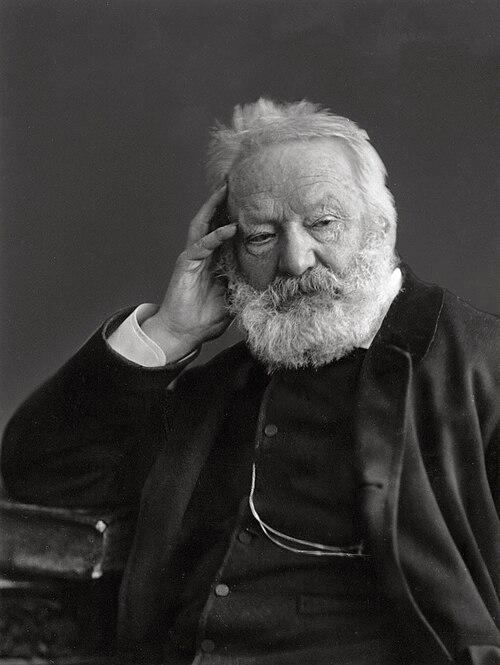
Victor Hugo
Victor-Marie Hugo, vicomte Hugo (French: [viktɔʁ maʁi yɡo] ; 26 February 1802 – 22 May 1885) was a French Romantic author, poet, essayist, playwright, journalist, human rights activist and politician. His most famous works are the novels The Hunchback of Notre-Dame (1831) and Les Misérables (1862). In France, Hugo is known for his poetry collections, such as Les Contemplations and La Légende des siècles (The Legend of the Ages). Hugo was at the forefront of the Romantic literary movement with his play Cromwell and drama Hernani. His works have inspired music, both during his lifetime and after his death, including the opera Rigoletto and the musicals Les Misérables and Notre-Dame de Paris. He produced more than 4,000 drawings in his lifetime, and campaigned for social causes such as the abolition of capital punishment and slavery. Although he was a committed royalist when young, Hugo's views changed as the decades passed, and he became a passionate supporter of republicanism, serving in politics as both deputy and senator. His work touched upon most of the political and social issues and the artistic trends of his time. His opposition to absolutism, and his literary stature,…
See all their booksBy the same author
More poetry
Reviews & ratings
No reviews yet. Be the first!
Books like this one