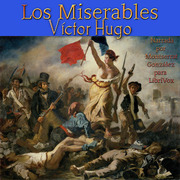
LibriVox recording of Los Miserables by Victor Hugo. (Translated by Nemesio Fernández .) Read in Spanish by Mongope Los miserables (título original en francés: Les misérables) es una novela del político, poeta y escritor francés Victor Hugo publicada en 1862, considerada como una de las obras más conocidas del siglo XIX. La novela, de estilo romántico, plantea a través de su argumento un razonamiento sobre el bien y el mal, sobre la ley, la política, la ética, la justicia y la religión. El autor confesó que se había inspirado en Vidocq, criminal francés que se redimió y acabó inaugurando la Policía Nacional francesa, para crear a los dos protagonistas y que la historia de su país le había inspirado para situar el contexto histórico: por ello, los personajes viven la Rebelión de junio (1832) y los posteriores cambios políticos. Además, el autor analiza los estereotipos de aquel momento y muestra su oposición a la pena de muerte. En su núcleo, al fin, la novela sirve como una defensa de los oprimidos sea cual sea el lugar o situación sociohistórica que vivan. - Summary by Wikipedia For further information, including links to online text, reader information, RSS feeds, CD cover or other formats (if available), please go to the LibriVox catalog page for this recording. For more free audio books or to become a volunteer reader, visit LibriVox.org . M4B Audiobook part 1 (176MB) M4B Audiobook part 2 (190MB)
Listen online
Chapter 1 / 71
00 - Tomo primero. Primera parte: Fantina: Prólogo
Total duration: 13:43:36
The author
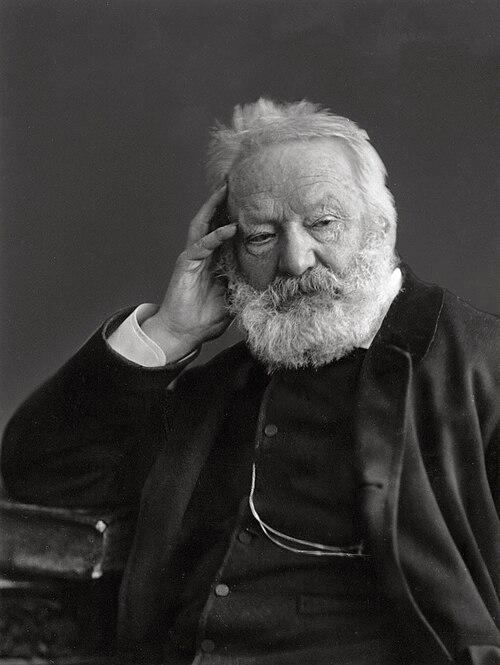
Victor Hugo
Victor-Marie Hugo, vicomte Hugo (French: [viktɔʁ maʁi yɡo] ; 26 February 1802 – 22 May 1885) was a French Romantic author, poet, essayist, playwright, journalist, human rights activist and politician.
His most famous works are the novels The Hunchback of Notre-Dame (1831) and Les Misérables (1862). In France, Hugo is known for his poetry collections, such as Les Contemplations and La Légende des siècles (The Legend of the Ages). Hugo was at the forefront of the Romantic literary movement with his play Cromwell and drama Hernani. His works have inspired music, both during his lifetime and after his death, including the opera Rigoletto and the musicals Les Misérables and Notre-Dame de Paris. He produced more than 4,000 drawings in his lifetime, and campaigned for social causes such as the abolition of capital punishment and slavery.
Although he was a committed royalist when young, Hugo's views changed as the decades passed, and he became a passionate supporter of republicanism, serving in politics as both deputy and senator. His work touched upon most of the political and social issues and the artistic trends of his time. His opposition to absolutism, and his literary stature,…