
О книге
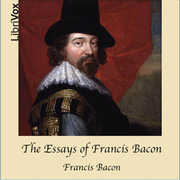
Voltaire was an atheist. Diderot was Enlightened. But trite titles seldom encompass completely the beliefs of any individual. And this one fact is certainly true when dealing with Sir Francis Bacon.The youngest son of Sir Nicholas Bacon, Francis was born in Strand, London, on Jan. 22, 1561. He went to Trinity College at Cambridge. He was elected to Parliament; he was Queen's Counsel; he even became Attorney General before finally gaining the position of Lord Chancellor.But as do the careers of so many politicians, in 1621 his political career ended in disgrace.And yet, for all of this, both Diderot and Voltaire considered him "the father of modern science." Others consider him only the father of the "scientific method." (That process of collecting and organizing data.) Bacon's "The Essays," to which we now turn our attention, are--if they are nothing else--a delightful collection in decided disarray. That is, they seem to take no true progression. But an essay is not meant to be a treatise. And for all that, these essays are still a pleasure to read.Encompassing a broad field of interest, their largesse denotes the broad learning of this brilliant philosopher. It is therefore our sincere hope that the reader will, themselves, encompass these Essays. More importantly, we hope you enjoy them. (Summary by Carl Vonnoh, III) For further information, including links to online text, reader information, RSS feeds, CD cover or other formats (if available), please go to the LibriVox ca
Слушать онлайн
Глава 1 / 14
The Essays of Francis Bacon 01
Общая длительность: 6:17:08
Об авторе

Francis Bacon
Фрэ́нсис Бэ́кон, 1-й виконт Сент-О́лбан (англ. Francis Bacon, 1st Viscount St Alban; /ˈbeɪkən/; 22 января 1561 — 9 апреля 1626) — английский философ, историк, публицист, государственный деятель, основоположник эмпиризма и английского материализма. Один из первых крупных философов периода Позднего Возрождения и начала Нового времени, Бэкон был сторонником строго обосновываемого, доказательного научного подхода. Он разрабатывал антисхоластический метод научного познания, стремясь по ходу дела выходить за пределы, задаваемые языком схоластики, которым он, как и другие философы того времени, всё ещё вынужден был пользоваться (как это отмечал применительно к Декарту русский философ В. С. Соловьёв). Догматической дедукции схоластов он противопоставил индуктивный метод, основанный на рациональном анализе опытных данных. Вместе с тем, Бэкон вышел на проблему дедукции как метода научного исследования и собирался в этой связи переписать свое понимание науки по отношению к её требованиям. Этому помешала смерть философа, вызванная ухудшением здоровья и собственноручными рискованными экспериментами. Главные произведения: «Опыты, или наставления нравственные и политические», «О достоинстве и…
Все книги автораЕщё в жанре «философия»
Отзывы и оценки
Отзывов пока нет. Будьте первым!
Похожие книги