
Sobre o livro
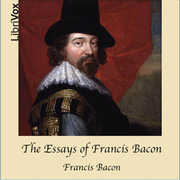
Voltaire was an atheist. Diderot was Enlightened. But trite titles seldom encompass completely the beliefs of any individual. And this one fact is certainly true when dealing with Sir Francis Bacon.The youngest son of Sir Nicholas Bacon, Francis was born in Strand, London, on Jan. 22, 1561. He went to Trinity College at Cambridge. He was elected to Parliament; he was Queen's Counsel; he even became Attorney General before finally gaining the position of Lord Chancellor.But as do the careers of so many politicians, in 1621 his political career ended in disgrace.And yet, for all of this, both Diderot and Voltaire considered him "the father of modern science." Others consider him only the father of the "scientific method." (That process of collecting and organizing data.) Bacon's "The Essays," to which we now turn our attention, are--if they are nothing else--a delightful collection in decided disarray. That is, they seem to take no true progression. But an essay is not meant to be a treatise. And for all that, these essays are still a pleasure to read.Encompassing a broad field of interest, their largesse denotes the broad learning of this brilliant philosopher. It is therefore our sincere hope that the reader will, themselves, encompass these Essays. More importantly, we hope you enjoy them. (Summary by Carl Vonnoh, III) For further information, including links to online text, reader information, RSS feeds, CD cover or other formats (if available), please go to the LibriVox ca
Ouvir online
Capítulo 1 / 14
The Essays of Francis Bacon 01
Duração total: 6:17:08
O autor

Francis Bacon
Francis Bacon, 1.º Visconde St Alban ([ˈbeɪkən]; 22 de janeiro de 1561 – 9 de abril de 1626) foi um filósofo e estadista inglês que serviu como Procurador-Geral e Lord Chanceler da Inglaterra sob o rei Jaime I. Bacon defendeu a importância da filosofia natural, guiada pelo método científico, e suas obras permaneceram influentes ao longo da Revolução Científica. Bacon foi chamado de pai do empirismo. Ele defendeu a possibilidade do conhecimento científico baseado apenas no raciocínio indutivo e na observação cuidadosa dos eventos na natureza. Ele acreditava que a ciência poderia ser alcançada pelo uso de uma abordagem cética e metódica, pela qual os cientistas buscassem evitar o autoengano. Embora suas propostas mais específicas sobre tal método, o método baconiano, não tenham tido influência duradoura, a ideia geral da importância e possibilidade de uma metodologia cética faz de Bacon um dos fundadores do método científico. Sua parte do método baseada no ceticismo foi um novo arcabouço retórico e teórico para a ciência, cujos detalhes práticos ainda são centrais nos debates sobre ciência e metodologia. Ele é famoso por seu papel na revolução científica, promovendo a experimentação…
Ver todos os seus livrosMais filosofia
Opiniões e avaliações
Ainda não há opiniões. Seja o primeiro!
Livros semelhantes