

PDFRead online
J. Jacques Rousseau, citoyen de Généve, a Christophe de Beaumont, Archevêque de Paris ... Avec sa lettre au Conseil de Généve
- Language
- Français
- Pages
- 206
- Downloads
- 0
About
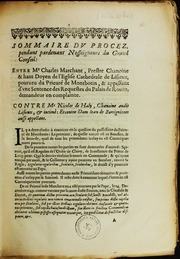
Pirated edition. Cf. Dufour Letter in reference to the condemnation of Rousseau's Émile Arrêt de la cour de parlement.- Mandement de Monseigneur l'archevesque de Paris.- [Lettre de] J. Jacques Rousseau ... A Christophe de Beaumont.- Lettre de J.J. Rousseau, au premier syndic du conseil de Geneve 32
The author

Jean-Jacques Rousseau
Jean-Jacques Rousseau (UK: , US: ; French: [ʒɑ̃ʒak ʁuso]; 28 June 1712 – 2 July 1778) was a Genevan philosophe, writer, and composer. His political philosophy was influential during the Age of Enlightenment, as well as during the French Revolution. Rousseau wrote Discourse on Inequality, which argues that private property is the source of social inequality, and The Social Contract, which outlines his ideas for what makes a legitimate political order. Rousseau's sentimental novel Julie, or the New Heloise (1761) was an example of his contributions to preromanticism and romanticism in fiction. His Émile, or On Education (1762) is a treatise on the place of the individual in society. Rousseau also wrote some autobiographical writings, such as the posthumously published Confessions (completed in 1770), and the unfinished Reveries of the Solitary Walker (composed 1776–1778)—,which featured an increased focus on subjectivity and introspection. He is thought to be one of the influences on the late 18th-century "Age of Sensibility."
See all their booksBy the same author
Reviews & ratings
No reviews yet. Be the first!
Books like this one