Guy de Maupassant
- Language
- Français
- Pages
- 656
- Downloads
- 3
About
Relié avec nos 42-60: Lamark / Elie Faure -- Franz Liszt / J.-G. Prod'homme -- Gérard de Nerval / Henri Strentz -- Henri Heine / Amédée Dunois -- Hégésippe Moreau / Hugues Balagny -- Jules Laforgue / Henri Guilbeaux -- Oscar Wilde / Georges Bazile -- Thomas Carlyle / Émile Masson -- Béranger / Adrien Waseige -- Ernest Renan / Jean Steene -- Louis Blanc / Maurice de Casanove -- Williams Morris / Georges Vidalenc -- Honoré Daumier / Louis Nazzi -- Giosue Carducci / Maurice Mignon -- Camille Pissarro / J.-C. Holl -- Théophile Gautier / Paul Dermée -- François Coppée / Patrice Buet -- Frédéric Nietzsche / Élie Faure -- Garibaldi / John Steene
The author
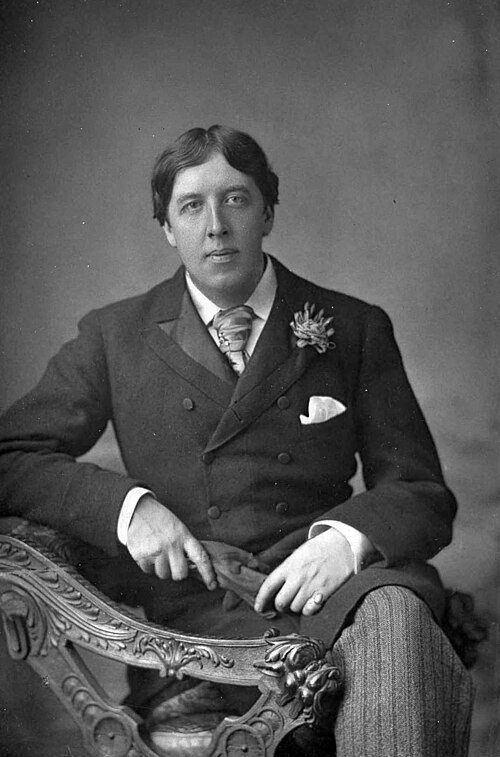
Oscar Wilde
Oscar Fingal O'Fflahertie Wills Wilde (16 October 1854 – 30 November 1900) was an Irish author, poet and playwright. After writing in different literary styles throughout the 1880s, he became one of the most popular and influential dramatists in London in the early 1890s. He was a key figure in the emerging Aestheticism movement of the late 19th century and is widely regarded as the greatest playwright of the Victorian era. Wilde is best known for his Gothic novel The Picture of Dorian Gray (1890), his epigrams, plays and bedtime stories for children, as well as his criminal conviction in 1895 for gross indecency and for practicing homosexual acts. Wilde's parents were Anglo-Irish intellectuals in Dublin. In his youth, Wilde became conversant in French and German. At university, he read Greats; he demonstrated himself to be an exceptional classicist, first at Trinity College Dublin, then at Magdalen College, Oxford. He became associated with the emerging philosophy of aestheticism during this time, led by two of his tutors, Walter Pater and John Ruskin. After university, Wilde moved to London into fashionable cultural and social circles. Wilde tried his hand at various literary…
See all their booksBy the same author
More biographies
Reviews & ratings
No reviews yet. Be the first!