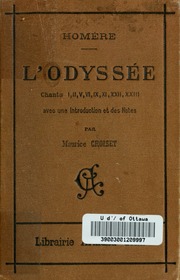




Anacréon : français-grec : suivi de pièces anacréontiques de Bion, Théocrite, etc., des poésies de Sapho et d'un spécimen de l'Homère français-grec et du Dante français-italien en vers imitatifs
- Language
- Français
- Pages
- 376
- Downloads
- 4
About
« Anacréon : français-grec : suivi de pièces anacréontiques de Bion, Théocrite, etc., des poésies de Sapho et d'un spécimen de l'Homère français-grec et du Dante français-italien en vers imitatifs » est un ouvrage de Homère, publié en 1855 aux éditions Paris : J. Claye. Ce livre du domaine public (376 pages) est disponible gratuitement en téléchargement PDF et en lecture en ligne.
The author

Homère
Homer (; Ancient Greek: Ὅμηρος [hómɛːros], Hómēros; possibly born c. 8th century BC) was an ancient Greek poet who is traditionally credited as the author of the Iliad and the Odyssey, two epic poems that are foundational works of ancient Greek literature. Homer was highly revered in ancient Greek society and is considered one of the most influential authors in history. The question of Homer's identity and existence—dubbed the "Homeric Question"—continues to be debated, and scholars generally regard the two poems as the works of separate authors. The Iliad centers on a quarrel between King Agamemnon and the warrior Achilles during the last year of the Trojan War. The Odyssey chronicles the ten-year journey of Odysseus, king of Ithaca, back to his home after the fall of Troy. The epics depict man's struggle, the Odyssey especially so, as Odysseus perseveres through the punishment of the gods. The poems are in Homeric Greek, also known as Epic Greek, a literary language that shows a mixture of features of the Ionic and Aeolic dialects from different centuries; the predominant influence is Eastern Ionic. Most researchers believe that the poems were originally transmitted orally.…
See all their booksBy the same author
More poetry
Reviews & ratings
No reviews yet. Be the first!
Books like this one